The grandchildren’s money came with conditions. They’d receive it only if they maintained a relationship with me. Defined as at least one in-person visit per month, or if circumstances prevented that, a weekly phone call of at least fifteen minutes. Tom assured me it was enforceable. “Incentive trusts are perfectly legal. Courts uphold them all the time.”
“What if the children try to use the grandchildren to get to me?” I asked.
“That’s why we’re setting the age at thirty,” Tom explained. “By then, they’ll be adults capable of making their own decisions, free from parental pressure.”
Second, the house. I transferred ownership into an irrevocable trust with me as the sole trustee and beneficiary during my lifetime. Upon my death, the house would be sold, with proceeds going directly to the designated charities. My children would get nothing from it. The trust was structured so it couldn’t be challenged or altered.
“This is the nuclear option,” Tom warned me. “Once this trust is established, you can’t undo it. Even if you reconcile with them, the house is locked in.”
“I understand,” I said. “Do it.”
Third, the financial accounts. I moved everything into payable-on-death accounts that would transfer directly to the charities, bypassing my estate entirely. No probate, no opportunity for challenge. “This is brilliant,” Tom said. “POD accounts supersede wills. The money goes where you designate. Period.”
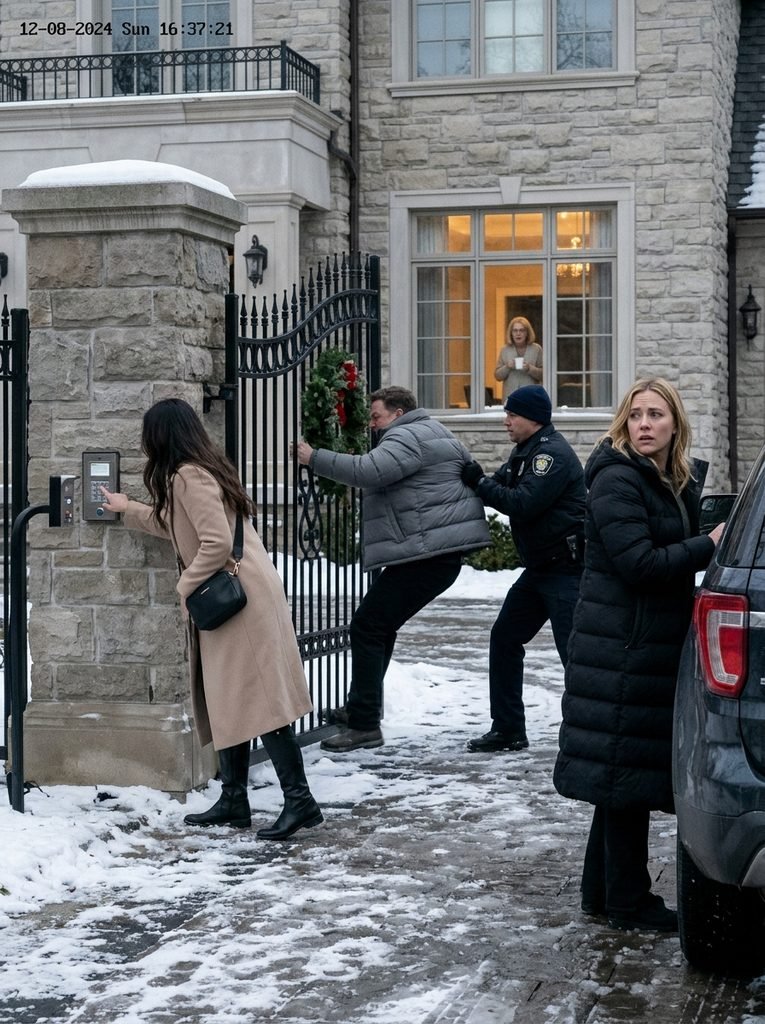
Fourth, and this is where I got creative, I hired a property management company that specialized in estate security. I had a state-of-the-art security system installed. Cameras at every angle, keypad entry at the gate I had
custom-built, motion sensors throughout the property, the works. The system was monitored twenty-four seven. I hired James, a retired police officer Tom recommended, who did twice-weekly checks on the property and was
on call for any incidents. I also changed every lock, every passcode, every entry point. The keys my children had, useless. The garage door code they knew, changed. The alarm code they might remember, reset.
Finally, I drafted a letter. Tom advised against it. “Maggie, anything you put in writing can be used against you if they contest the will.”
“I don’t care,” I said. “They need to understand why.”
The letter was three pages long. It laid out exactly why I was making these changes. It was clear, factual, and devastating. I listed dates, the hospital stay, the phone calls, their requests for financial information, their sudden interest in my transition to assisted living. I quoted their own words back to them. I didn’t send it. Not yet. But I had it ready, notarized, and everything.
“Maggie,” Tom said when we finished, looking at me over his reading glasses, “are you absolutely sure about this? There’s no going back once we file these documents. This will change your family forever.”
I looked him straight in the eye. “My family changed the moment they told me to stop calling. I’m just making it official.”
He nodded slowly. “Then let’s make it official.”
We filed everything. The trust, the POD accounts, the will, all of it ironclad, all of it legal, all of it permanent.
For three months, life was quiet. I didn’t tell the kids anything. They didn’t call, so there was nothing to tell them anyway. I started living differently, really living, not just existing in the spaces between their occasional acknowledgments.
I joined a book club at the library. We met every Tuesday evening. The first book we read was Educated by Tara Westover. I sat in that circle of eight women discussing family trauma and the courage it takes to choose yourself
over toxic family bonds. And I realized I wasn’t alone. Three of the women had similar stories. Children who drifted away, who only called when they needed something, who treated aging parents like obligations rather than people.
I took a watercolor painting class at the community center, Thursdays from two to four. I’d never painted before. My first attempts were terrible. Muddy colors and shaky lines. But by week six, I’d painted a landscape of the Rocky Mountains that the instructor said showed real promise. I hung it in my living room, right where a family photo used to be.
I volunteered at the food bank twice a week, Mondays and Fridays, eight to noon. I sorted donations, packed boxes, helped families shop for groceries. I met people who had so little but were so grateful. It put things in
perspective. I had a beautiful home, financial security, and my health. What did I really have to complain about?
I made friends, real friends. Sarah from book club, who was a retired teacher with a wicked sense of humor. Linda from painting class, who’d lost her husband the same year I lost Richard. Tom and Marie from the food
bank, a couple in their eighties who still held hands while sorting canned goods. These people wanted to spend time with me because they enjoyed my company, not because they were waiting for me to die, not because they wanted something from me, just because they liked me.
Mrs. Patterson and I became close. We had coffee every morning on my back patio when the weather was nice. She was the one who noticed the change in me. “You seem lighter, Maggie,” she said one October morning, her arthritic hands wrapped around her coffee mug. “More yourself, or maybe more yourself than you’ve been in years.”
“I feel lighter,” I told her. “Like I put down something heavy I’d been carrying for years and didn’t even realize the weight of it until it was gone.”
“Your children?” she asked gently.
“My expectations,” I corrected. “My hope that they’d become the people I raised them to be. Once I let that go, everything got easier.”
The security system became something I appreciated more than I expected. The cameras gave me peace of mind. I could see who was at my door before answering. The gate gave me control over who entered my space. My home felt like mine again, not like a property my children were waiting to inherit.
I thought maybe that would be it. Maybe they’d just drift away completely and we’d become strangers, and that would be the end of it. I was wrong.
The call came two weeks before Christmas. Jennifer. “Hey, Mom. So, we’re all planning to come to your place for Christmas. Like old times. Isn’t that great?”
My stomach dropped. “All of you?”
“Yes. Me and Mark and the girls, Michael and Tina and Tyler, and Lisa and Brandon. We thought it would be nice to have a big family Christmas at your house. We’ll all stay over, make a long weekend of it.”
They hadn’t visited in over a year. Now they wanted to stay for a long weekend.
“Why now?” I asked.
“What do you mean, why now? It’s Christmas, family time.” Her voice had that forced cheer that set my teeth on edge.
“Jennifer, you told me to stop calling. You said I was being needy. You said you had your own lives.”
Brief pause. “Mom, that was months ago. Don’t be like that. We want to spend Christmas with you.”
No apology. No acknowledgment. Just an expectation that I’d forget everything and welcome them back.
“What’s really going on?” I asked.
Another pause, longer this time. Then her voice changed, got sharper. “Fine. You want to know? We’ve been talking, the three of us. We’re worried about you. You’re getting older, and this house is too much for you to
handle. We think it’s time to discuss your future. We want to help you transition to a more manageable living situation.”
There it was. The real reason.
“Transition to a more manageable living situation,” I repeated. “You mean you want me to sell the house?”
“Mom, it’s not about the house.”
“Yes, it is. It’s completely about the house and my money and what you think you’re entitled to.”
“We’re your children. We have a right to be concerned about—”
“About what? My assets? Because you certainly haven’t been concerned about me.”