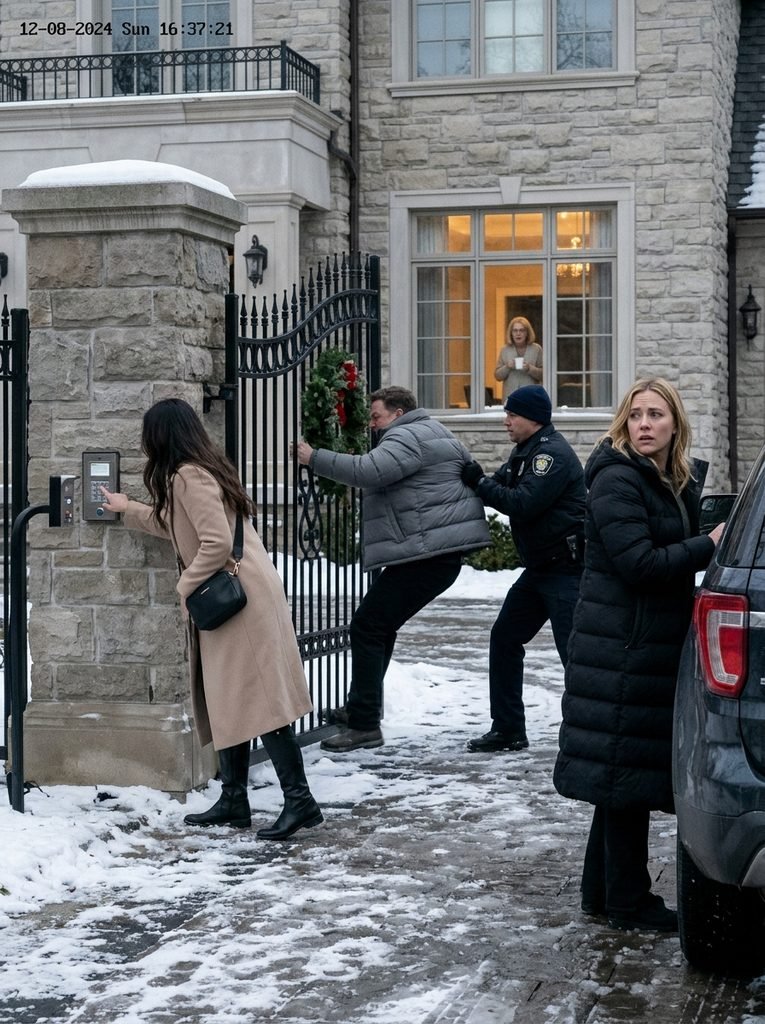
The security guard’s voice was calm but firm. “Ma’am, these people are not on the authorized list. Should I escort them off the property?”
I looked at my three children standing at my front gate, their faces twisted with disbelief and rage, and I said the words I never imagined I’d say. “Yes, remove them from my property immediately.”
My name is Margaret. Most people call me Maggie. I’m seventy-two years old, and I’ve lived in Denver, Colorado, my entire life. I raised three children in this city. I thought I’d built a family. I thought I’d done everything right.
I married young, twenty-three, to a man named Richard who worked in construction. We weren’t wealthy, but we were comfortable. Richard was a good provider, and I stayed home with the children like most women did
back then. We had Jennifer first, then Michael two years later, and finally Lisa, our surprise baby, who came along when I was thirty-eight. Richard and I built a good life. We saved every penny we could. We bought a
modest three-bedroom house in a neighborhood that was just starting to develop. Back then, it was the edge of the city. Trees everywhere, dirt roads, kids playing in the streets until the streetlights came on.
I threw myself into being a mother. I was the room mom at school every year. I remember staying up until midnight sewing Jennifer’s Dorothy costume for the Wizard of Oz, complete with ruby slippers I painted myself. I made Michael’s Darth Vader costume from cardboard boxes and duct tape. He wore it so much that year I had
to make repairs weekly. I drove the carpool for soccer, dance, baseball, you name it. My van became a second home. I knew every child’s favorite snack, every allergy, every inside joke. I packed lunches with little notes tucked inside. Jokes for Michael, encouragement for Jennifer before tests, silly drawings for Lisa.
I sat through every recital, every game, every parent-teacher conference. I was there for the spelling bees and the science fairs and the awkward middle school dances where I chaperoned. When Jennifer got bullied in seventh
grade, I was the one who sat with her every night, helping her process her feelings, teaching her to stand up for herself. When Michael broke his arm playing football, I was at every physical therapy appointment. When Lisa struggled with algebra, I hired a tutor and sat in on the session so I could help her with homework.
I didn’t just raise them. I was present for them every single day, every single moment that mattered.
When Richard died of a heart attack, sudden, just like that, at fifty-nine, I thought I’d collapse. The kids were adults by then. Jennifer was thirty-two, Michael was thirty, and Lisa was twenty-four. They rallied around me at the funeral. They held my hands. They told me everything would be okay. And you know what? I believed them.
After Richard passed, I had decisions to make. The life insurance wasn’t enormous, but it was substantial. The house was paid off. Richard had been smart about his retirement planning, bless him. Between social security, his pension, and the investments we’d made, I was financially secure. More than secure, actually. I was comfortable.
I could have downsized, moved to a smaller place, handed out chunks of money to the kids, but I didn’t. Something in me said to wait, to be smart, to plan carefully.
The neighborhood had changed dramatically over the years. That modest house we bought for forty-two thousand dollars in 1976, the area had developed into one of Denver’s most desirable neighborhoods. The value
had skyrocketed. Real estate agents left notes on my door monthly, begging to list the property. I had the house renovated instead. Put in a new kitchen with granite countertops and stainless appliances. Redid the bathrooms, finished the basement, updated the electrical and plumbing. It became my sanctuary, my pride and joy.
The kids loved coming over after the renovations. “Mom, this place looks like a magazine,” Jennifer would say.
For a few years after Richard died, things were beautiful. The kids visited regularly. Every Sunday dinner was at my house. Holidays were loud and full of grandchildren’s laughter. Jennifer brought her two girls, Sophie and
Emma. Michael had a son, Tyler. Lisa was working on her career, not married yet, but she’d come over midweek sometimes just to have coffee with me. I was the matriarch, the center of the family. I thought it would always be that way.
The change was so gradual, I almost didn’t notice it at first. Jennifer got a promotion at her marketing firm. Suddenly, Sunday dinners became every other Sunday, then once a month. “Mom, I’m sorry. The girls have so many activities now. It’s just crazy.” I understood. Kids these days are busy.
Michael and his wife bought a bigger house on the other side of town, forty-five minutes away instead of fifteen. “The commute is tough, Mom. We’ll see you soon though.” Soon stretched longer and longer.
Lisa met someone, a man named Brandon who worked in tech. Within six months, they were engaged. Within a year, married. She moved to his place in Boulder. “It’s not that far, Mom. Just a quick drive.” But that quick drive happened less and less frequently.
I told myself it was normal. This is what happens when children build their own lives. They get busy. They have responsibilities. I had to adjust my expectations. So I did. I stopped expecting Sunday dinners. I stopped assuming they’d call just to chat. I started being the one who reached out.
I’d call Jennifer on her drive home from work. “Just wanted to hear your voice, honey.” I’d text Michael pictures of his dad that I’d found going through old albums. “Thought you’d like to see this.” I’d invite Lisa to lunch, offering to drive to Boulder myself.
The responses got shorter. “Thanks, Mom, but I’m swamped.” “Can’t talk now, Mom. I’m in a meeting.” “Maybe next month, Mom. We’ll see.”
I started to feel like I was bothering them, like my calls were interruptions instead of connections. But I pushed that feeling down. They’re busy, I told myself. They still love you. They’re just living their lives.
Then came March of last year. I woke up one morning with chest pains. I’m not the type to panic, but I’m also not stupid. Chest pains at seventy-one years old, that’s not something you ignore. Richard’s heart attack was burned into my memory. I wasn’t taking chances.
I called 911. The ambulance came. Turned out it wasn’t a heart attack. It was severe anxiety and acid reflux, but the scare was real. They kept me in the hospital overnight for observation.
From my hospital bed, I called Jennifer. It went to voicemail. I left a message. “Honey, it’s Mom. I’m at Presbyterian Hospital. I had chest pains this morning. I’m okay. They say it’s not my heart, but I’m here overnight. Call me when you can.”
I stared at my phone, watched the minutes tick by. The nurse came in to check my vitals. Still no call. Another nurse brought dinner. Gray chicken and overcooked vegetables. I couldn’t eat. My phone sat silent on the rolling table beside me.
Two hours later, she texted back. “OMG, Mom. So glad you’re okay. Crazy day at work. We’ll try to call later.” Crazy day at work. Her mother was in the hospital, and she had a crazy day at work. She didn’t call later. Not that evening, not that night.
As I lay awake in that uncomfortable bed, listening to machines beep and nurses whisper in the hallway, I called Michael. Same thing. Voicemail. I left a similar message, trying to keep my voice steady, trying not to sound
desperate or needy. He texted six hours later. “Glad you’re fine, Mom. Get some rest.” Three words of actual concern. “Glad you’re fine.” Like I’d told him I had a cold, not that I’d been rushed to the hospital in an ambulance, thinking I might be dying like his father did.
Lisa didn’t respond until the next day. “Sorry, Mom. Phone was off. You’re okay though, right?” Phone was off for twenty-four hours. Who turns their phone off for an entire day in this age?