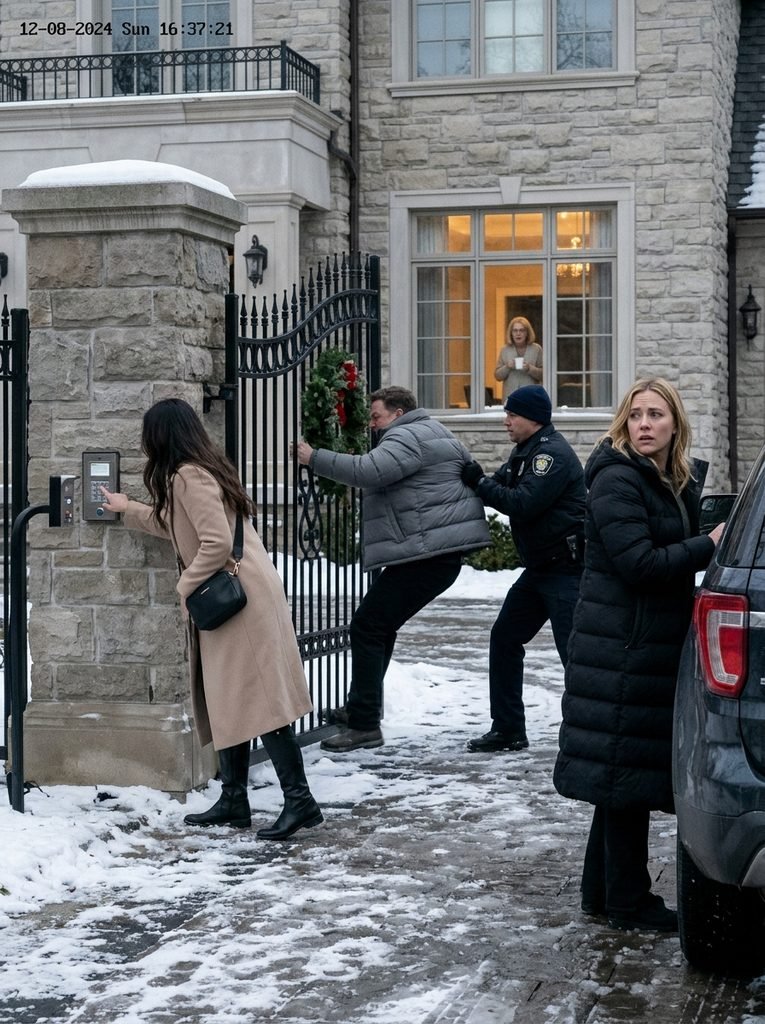
Something cracked inside me in that hospital room. Something that had been bending for a while finally snapped.
I was released the next morning. A kind nurse asked if someone was picking me up. “Oh yes,” I lied. “My daughter’s on her way.” I took an Uber home.
After the hospital incident, I started paying closer attention. Really paying attention. When I did manage to get Jennifer on the phone, her conversations had a pattern. She’d ask how I was doing, but she’d cut me off halfway through my answer. “That’s great, Mom. Hey, I need to ask you something. Did Dad have any life insurance policies we don’t know about?”
Michael started conversations about finances. “Mom, have you thought about estate planning? You should really have everything organized, you know, for when the time comes. It would make things so much easier for us.” For us. Not for me. For them.
Lisa was more subtle. She’d visit once every few months and walk through the house like she was appraising it. “You know, Mom, this house is way too big for you. Have you ever thought about moving into a senior community? You could sell this place and the money would set you up so nicely.”
I started to realize that their interest in me came with an agenda. They weren’t calling to see how I was doing. They were calling to check on their inheritance.
The house, I learned from some casual research online, was now worth close to nine hundred thousand dollars. My investments and savings added up to another six hundred thousand. I had a life insurance policy worth two hundred fifty thousand. I was worth nearly two million dollars to them. To them, I wasn’t Mom anymore. I was a retirement plan.
In September, I had what I thought was a reasonable request. My next-door neighbor, sweet Mrs. Patterson, fell and broke her hip. I saw what a struggle it was for her, getting to doctor’s appointments, picking up groceries,
basic things. It scared me. Not because I couldn’t take care of myself, I was managing fine, but because I realized how alone I was. If something happened to me, something serious, who would be there?
I called a family meeting. Not in person, I knew better by then, but a three-way call. “I need to talk to you all about something,” I said when I got everyone on the line. “I’ve been thinking about the future. I’m getting older, and I need to know I can count on you all if something happens. Mrs. Patterson next door broke her hip and—”
Jennifer cut me off. “Mom, please don’t start this again.”
“Start what?” I asked, my heart already sinking. “I’m just saying I need to know.”
“You need to know we’ll drop everything and come running whenever you call?” Michael’s voice had an edge to it I’d never heard before. Sharp, impatient. “Mom, we’ve talked about this. We have our own lives.”
“I’m not asking you to drop everything,” I said, my voice shaking. “I’m asking if I can count on you if something serious happens, like when I was in the hospital and none of you—”
“Here we go with the hospital thing again,” Jennifer interrupted. “Mom, you were fine. The doctor said you were fine. You keep bringing this up like we abandoned you or something.”
“You didn’t even call me back.” The words burst out of me. “I was scared. I thought I was having a heart attack like your father. I was alone in that hospital room all night, and not one of you picked up the phone.”
“We texted you.” Lisa’s voice was defensive. “We knew you were okay.”
“Texting isn’t the same as—”
“Mom, listen.” Lisa’s voice was the one that hurt most because it was so cold, so detached, like she was speaking to a difficult client, not her mother. “We love you, but we can’t be at your beck and call. We have jobs, we have families, we have responsibilities.”
“I’m your family,” I whispered. “I’m your mother. I took care of you your whole lives. I was there for everything. Every scraped knee, every broken heart, every middle-of-the-night crisis. And now I’m asking for just a little bit of that back, and you’re acting like I’m asking for the world.”
Silence. Heavy, uncomfortable silence.
“Mom, you need to be more independent,” Jennifer said finally. “Maybe it’s time to look into assisted living. Or—”
“I don’t need assisted living.” My voice was louder than I intended. “I can take care of myself. I just need to know that my children, my own children, would be there if I really needed them.”
“You don’t really need us, though,” Michael said. “You just want attention. There’s a difference.”
The words hit me like a physical blow. Want attention. Like I was a toddler acting out.
“Is that what you think?” I asked, my voice barely above a whisper. “That I’m just looking for attention?”
“Mom, you’re fine,” Lisa said. “You’re healthy. You have money. You have a beautiful home. You don’t need us hovering over you.”
“I’m not asking you to hover. I’m asking you to care.”
There was silence. Then Michael spoke, and his words are branded into my memory. “Mom, stop calling us every time you feel lonely or scared. We have our own lives. We can’t keep doing this. You’re fine. You’re healthy. You have money. Figure it out yourself.”
I sat there, phone pressed to my ear, tears streaming down my face. “So that’s it?” I asked. “That’s what fifty years of motherhood gets me? Figure it out yourself?”
“Mom, you’re being dramatic,” Lisa said. “We’re not saying we don’t love you. We’re saying you need to stop being so needy.”
Needy. They called me needy.
I hung up. I sat in my kitchen, the kitchen I’d renovated, the kitchen where I’d made thousands of meals for these people, and I cried harder than I’d cried since Richard died. But somewhere underneath the tears, something else was growing. Something cold and clear and sharp.
I didn’t sleep that night. I lay in bed staring at the ceiling, replaying every conversation, every dismissal, every casual cruelty. And I made a decision. If they wanted me to figure it out myself, that’s exactly what I’d do. But I’d do it on my terms.
The next morning, I called my lawyer. His name is Thomas Brennan, and he’d handled Richard’s estate. Good man. Fair. No nonsense. “Tom, I need to make some changes,” I said when I got him on the phone. “Significant changes.”
We met at his office that afternoon. I came prepared with documentation. My will, my investment accounts, my property deed, everything. “Talk to me, Maggie,” Tom said, pouring me coffee. “What’s going on?”
I told him everything. The hospital, the phone calls, the clear interest in my assets versus no interest in me as a person. I didn’t cry. I was done crying. Tom listened, nodding occasionally, his expression neutral. When I finished, he leaned back in his chair. “Okay, let’s talk about your options.”
Over the next three weeks, Tom and I reconstructed my entire estate plan. We met four times, long meetings where he’d pour coffee and we’d go through every single asset, every single document, every possible scenario.
First, the will. I removed all three children as primary beneficiaries. Tom warned me they could contest it. “They’ll claim undue influence, diminished capacity, all the usual arguments,” he said.
“Let them try,” I replied. “I’m of sound mind. I have documentation of their behavior. I have witnesses.”
“You do,” he agreed. “Mrs. Patterson would testify to the gate incident. The hospital has records of your stay and the lack of family contact. The security system has timestamps and recordings.” He smiled slightly. “You’ve been meticulous.”
“I learned from the best,” I said. Richard had always been organized about paperwork.
We divided my estate as follows. Forty percent to the American Cancer Society in Richard’s memory. He’d have liked that. Thirty percent to the Denver Women’s Shelter, because I’d learned what it meant to need protection
from your own family. Twenty percent split among my grandchildren, to be held in trust until they turned thirty. Ten percent to Mrs. Patterson, my neighbor, who’d shown me more kindness in six months than my children had in six years.