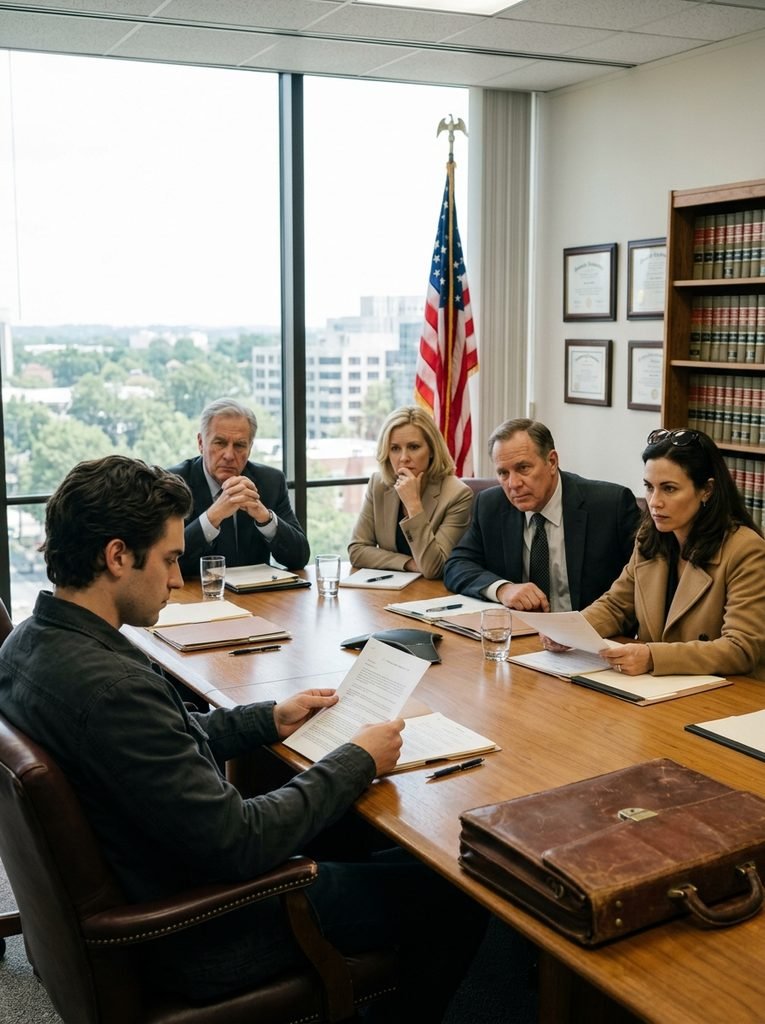
He showed me how to file notices that would make it legally impossible for my parents or Clare to move anything without my signature.
When I walked out of his office that day, I felt lighter.
Not because everything was fixed, but because I finally had a plan.
The next month became about quietly building a life that wasn’t dependent on my family’s approval or drama.
I picked up extra hours at work, partly to save more aggressively, and partly because the distraction felt good.
My manager noticed and, to my surprise, called me into his office one morning to tell me he was impressed.
“You’ve really stepped up lately,” he said. “We’ve got a lead position opening soon. Think you’d be interested?”
I nodded, hiding how fast my heart was beating.
A lead position meant a raise, better benefits, and more control over my schedule.
It also meant that for the first time, I wouldn’t have to think twice about covering my own expenses or about freezing anyone else’s.
Outside of work, I started treating the cabin as my own sanctuary.
Every Friday after work, I drive out there, bring groceries, light a fire, and spend the weekend in the quiet.
It became my reset button.
No calls, no family drama, just me and the sound of the lake at night.
I started cleaning it up, too.
Fixing the loose steps on the porch, oiling the hinges that had been squeaky for years, patching the screen door myself.
Something about caring for the place with my own two hands felt almost defiant.
Like I was saying, this is mine, too.
You don’t just get to erase me from this.
Then came the first real turning point.
My lawyer called me one afternoon with an update.
The paperwork I’d filed to block the cabin transfer had gone through successfully.
Any attempt to reassign the property without my consent would now be flagged legally.
When I got off the phone, I laughed out loud for the first time in months.
Not just a small laugh, either.
A full unguarded laugh that startled even me.
For once, I wasn’t the one being blindsided.
I was holding the cards.
That weekend, I drove to the cabin again, this time with a box of supplies, new locks, new deadbolts, even a keypad entry system I’d splurged on.
I spent the entire day installing everything, making sure every door and window had fresh security measures.
When I was done, I stood on the porch, sweaty and covered in sawdust, and felt an incredible sense of peace.
No matter what they tried next, they couldn’t just walk in and take it.
Meanwhile, my life in the city kept improving.
I got the promotion at work and a decent raise to go with it.
My co-workers took me out to celebrate, and for the first time, I didn’t feel like I was dragging a cloud of family drama into every conversation.
Even my social life picked back up.
I started going to game nights again, started saying yes to dinner invites instead of making excuses.
People noticed the difference.
One of my friends joked that I looked 10 lbs lighter and asked if I’d been working out.
And maybe I had, not in the gym, but in the sense that every decision I made now felt like a rep strengthening something inside me.
Then one Tuesday morning, I got a text from the bank.
Another attempt had been made to access the frozen accounts.
But this time, instead of just declining it, I had my lawyer draft a formal notice to Clare warning her that continued attempts would constitute financial misconduct.
He CC my parents on the email.
The silence that followed was almost deafening.
For 2 weeks, I didn’t hear a single word from anyone.
No calls, no letters, no guilt tripping voicemails.
It was bliss.
But I knew better than to think they’d given up.
Sure enough, the comm broke on a Saturday afternoon when mom showed up at my apartment unannounced.
I almost didn’t open the door, but curiosity got the better of me.
She stood there holding a Tupperware of lasagna.
Of all things, like this was just a casual visit.
“Can I come in?” she asked, smiling like we hadn’t been at war for months.
I let her in but said nothing, just waited.
She sat at my kitchen table, placed the lasagna down, and sighed.
“Ol, this has gone far enough,” she said gently. “You’ve made your point, but we can’t keep living like this. Your father’s blood pressure is through the roof. Claire’s been crying constantly.”
“Cry me a river,” I cut in, my voice sharper than I intended.
She blinked at me, surprised, then continued.
“We all just want to move on from this. If you’d release the funds and agree to let Clare handle the cabin, we could put this behind us.”
There it was, the real reason for the visit.
I leaned back in my chair and looked at her.
Really looked at her.
For years, I jumped through hoops for that woman, desperate for a scrap of approval.
But now, all I felt was a strange calm.
“No,” I said simply.
She stared at me like she couldn’t quite process what she’d just heard.
“No, that’s right,” I said. “No to releasing the funds. No to giving up the cabin. No to pretending any of this is fine.”
For a long moment, we just sat there in silence.
Then she stood, her face tight, and without another word, she left.
When the door shut behind her, I exhaled slowly and felt something click into place.
I wasn’t just surviving anymore.
I was choosing.
Choosing to draw a line, to stop playing the beautiful son who kept the piece at his own expense.
And I had a feeling that line I’d drawn was about to set the stage for everything that came next.
Because if my family thought I was done just because I’d stopped answering calls, they were about to find out how much more I was capable of when I finally decided to fight back on my terms.
And this time, I wasn’t going to let them see me coming.
The weekend after mom’s visit, I drove out to the cabin again, partly because I needed to clear my head, and partly because I’d started thinking of it less as a family retreat and more as home base.
The leaves had started to turn, and the whole place looked like something out of a postcard.
Gold and red reflections rippling across the lake, the smell of damp earth in the air.
I sat on the porch with a mug of coffee and my laptop, scrolling through property records and trust documents.
It had become a kind of ritual by now, something grounding.
That’s when I noticed something I hadn’t seen before.
A clause in the trust that stated if one trustee was unwilling to participate in good faith management, the other trustee could petition for sole authority.
My parents must have assumed I’d never notice, but there it was in black and white.
I scheduled another meeting with my lawyer first thing Monday.
He leaned back in his chair as I explained what I’d found, a slow smile spreading across his face.
“If they keep pushing,” he said, “you could absolutely make a case that they’re the ones acting in bad faith, especially if you’ve got proof of unauthorized withdrawal attempts.”
Which he tapped the folder of bank records I brought.
“You do.”
The idea of becoming the sole trustee was tempting, more tempting than I wanted to admit.
Not because I wanted to keep the cabin forever, but because I wanted the choice to be mine, not theirs.
I wanted to take back every ounce of control they tried to strip from me.
That week, I also started talking to a financial adviser.
I’d never bothered before, figuring my savings were fine where they were, but now I wanted everything airtight.
We set up a separate account, one only I could access, and I moved my personal savings and investments there.
I also changed every password, every pin, every security question tied to anything remotely connected to my finances.
Each step felt like another brick in a wall I was building between myself and the chaos my family thrived on.
Then came the email that turned everything from defense into offense.
It was from a former neighbor of my parents, someone I hadn’t talked to in years who’d heard about the situation through the grapevine.
“Hey Oliver,” the email began. “I don’t mean to stir the pot, but I thought you should know. Claire’s been telling everyone at church that you stole money from the family accounts. She said, ‘You drained them out of spite and left them high and dry.’ People are starting to talk.”
I read it three times, my pulse pounding in my ears.
She wasn’t just trying to take everything from me privately.
She was smearing my name publicly.
That night, I sat at my kitchen table with my laptop open, staring at the bank statements and email notifications I’d been collecting for months.
I realized I didn’t just have proof that I hadn’t stolen anything.
I had a complete paper trail showing every single time Clare had tried to take money she wasn’t entitled to.
For the first time, I saw the possibility of using it.
I called my lawyer again, told him about the rumors, and asked what my options were.
“If they’re defaming you,” he said carefully, “you could send a cease and desist. Or if you want to push harder, you could pursue damages, especially since you have financial losses tied to this.”
Damages.
The words sat heavy in my mind, but not in a bad way.
Meanwhile, work continued to go well.
The raise from my promotion hit my account for the first time, and I paid off the last of my student loans in one go.
I stood in my kitchen after making that payment, staring at the confirmation email, and felt something uncoil in my chest.
For the first time in my adult life, I was completely debt-free, independent in every way that mattered.
I decided to channel that momentum.
I started fixing up the cabin more seriously.
Not just repairs, but improvements.
New lighting fixtures, fresh coats of paint.
Even a used kayak I found for sale online.
It wasn’t just about making it nicer.
It was about claiming it, shaping it into something that reflected me instead of my parents’ handme-down taste.
One Friday evening, as I was hauling lumber out of the back of my car for a small deck project, my phone buzzed with a notification.
Another attempted withdrawal.
This time it wasn’t Clare, it was my dad.
I froze, staring at the screen.
And then slowly a smile spread across my face.
It wasn’t just Clare anymore.
Dad had finally decided to get his hands dirty.
And that ironically made my case even stronger because now I could prove that both trustees were acting without my consent.
I forwarded the alert to my lawyer with a simple message.
“Let’s move forward.”
That was the moment everything shifted.
I wasn’t just reacting anymore.
I was preparing.
I spent the next few weeks quietly gathering everything I might need.
Every email, every text, every voicemail, every failed withdrawal attempt.
I had them organized into folders labeled and timestamped.
I even transcribed some of the more incriminating voicemails where Clare outright admitted to needing the money for renovations as though it were hers by right.
The next time mom called, I actually answered.
“Oliver,” she said, clearly surprised I’d picked up. “We need to sit down and have a serious talk about—”
“We will,” I cut in, my tone even, “but not until I have my lawyer present. And not until I’ve reviewed the last few months of account activity with him. You might want to do the same.”
There was a long pause on the other end.
“Are you threatening us?” she asked finally.
“No,” I said. “I’m giving you a heads up.”
When I hung up, I felt that same cold calm I’d felt in the lawyer’s office months ago, but stronger now, sharper.