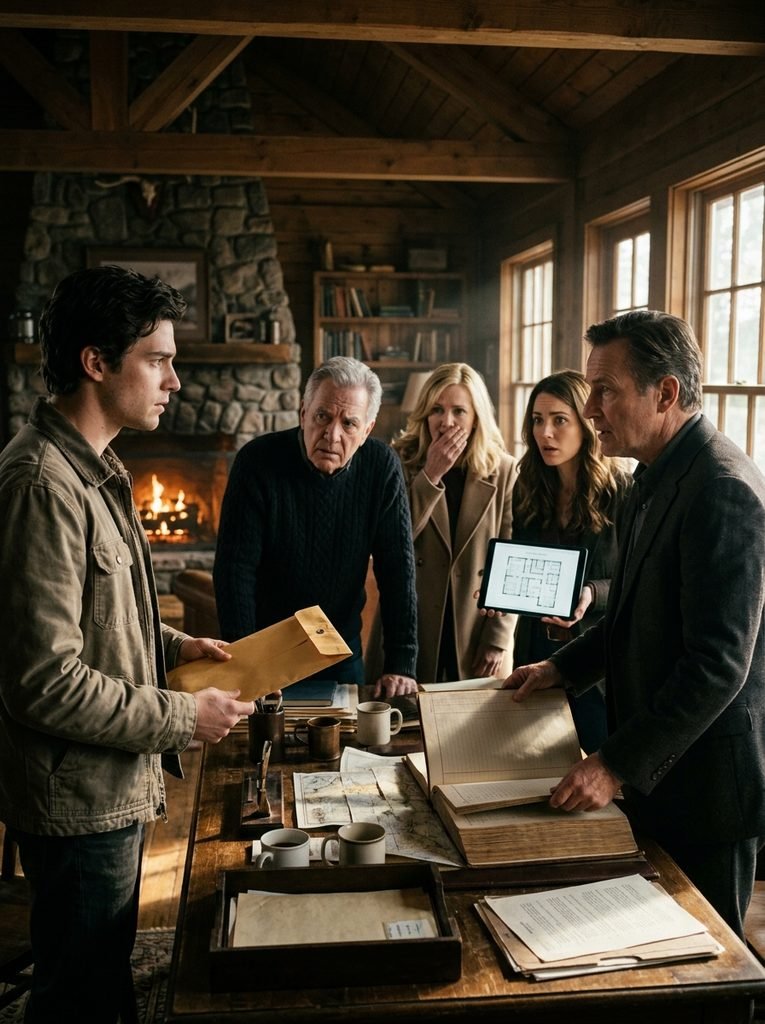
When Rachel noticed me, she clicked off the call and waved the binder.
“Okay, so here’s the thing,” she said brightly. “We’ve been thinking, and there’s actually a really smart way we can all benefit from this. You’re obviously the owner now, which is great. Unexpected, but great. And instead of letting this place just sit here, you could let us handle the renovations. We front the costs, manage the logistics, and then we split the profits from rentals.”
I sip my coffee.
She kept going.
“It’s win-win. You don’t lift a finger. We already have the contacts. The contractor I was talking to, he’s ready to start next week. It’ll be high-end rustic luxury. Think quartz counters, exposed beams, maybe a sauna.”
My father chimed in.
“You’re not exactly in a position to handle a property this size, Cole. You’ve got what? A one-bedroom apartment and a job at a bookstore.”
He said it like it was a crime.
My mother offered a smile like she was trying out empathy for the first time.
“We just don’t want you to feel overwhelmed. Your grandmother was sentimental. This place might feel like a burden more than a blessing.”
Rachel stepped forward, flipping to a page in the binder.
“Look, here’s a breakdown of projected revenue. We’re talking six figures within the first year.”
They thought they were being generous.
They thought they were helping.
But I saw it for what it was, a setup, a way to rope me in, to make me dependent, and then slowly edge me out once the paperwork was signed.
They’d done it before with my uncle’s estate, with my cousin’s old business, smiling while planting knives.
I nodded slowly.
“Thanks for the offer.”
They all straightened a little, hopeful.
“But no.”
The word hung in the air like a guillotine.
Rachel blinked.
“Excuse me.”
“I’m not selling. I’m not flipping. And I’m definitely not handing it over to the people who cut me out of their lives and only showed up again when there was real estate involved.”
My mother flinched.
My father’s face hardened.
Rachel laughed.
“Come on, you really think you can manage this on your own?”
“I think I’ll figure it out,” I said. “I always do.”
They started to argue about logistics, about family legacy, about throwing away opportunity.
But I’d stopped listening.
I was already walking back inside, letting the door creek shut behind me.
They didn’t leave right away.
They lingered.
And later that day, I found out why.
Because they weren’t done yet, and neither was I.
They didn’t leave that day.
I half expected them to pack up their brochures, their fake smiles, their passive aggressive guilt trips, and drive down the mountain, muttering about ungrateful children.
But no, they stayed.
Claimed they were just tying up loose ends and mourning in their own way.
But something about the way they kept circling the cabin, talking in hush tones, taking phone calls just out of earshot put me on edge.
By the third day, I was watching them through the window like I was in some kind of wilderness thriller.
My father spent his mornings pacing near the tree line, probably debating how to spin the situation into something salvageable.
My mother floated in and out of rooms inside the cabin like a ghost, touching things that didn’t belong to her. Grandma’s quilt, her birdhouse collection, the chip tea set we’d used every winter.
Rachel, meanwhile, was still glued to her phone, typing furiously, stopping only to take selfies near the fireplace.
I caught her recording a video once.
She was holding the wolf folder like a prop, smiling as she whispered something about family heritage.
On the fourth morning, I found the front door wide open.
I was up early, earlier than usual, thanks to a storm that had rattled the windows all night.
The fireplace had gone out, and the cabin was cold enough to see my breath.
I got up, groggy, still half asleep, and stumbled out of bed to make coffee.
But when I walked into the living room, something felt off.
The door wide open, cold air pouring in, pine needles scattered across the floor.
I stepped outside barefoot and looked around.
The cars were still in the driveway. No signs of forced entry, no wildlife tracks, but something felt wrong.
I checked the side shed, nothing missing.
I checked the back door, still locked.
Then I opened the door to Grandma’s old office, and my heart dropped.
The safe was open.
Not just open, emptied.
I didn’t even know the combination.
Grandma had always said it was four important things, but she never told me what those were.
I figured it was old photos, maybe her wedding ring, maybe a few bonds or sentimental heirlooms.
It had been locked the entire time I’d been there, tucked behind a bookshelf, hidden in plain sight.
But now the bookshelf had been moved.
The rug crumpled, the frame on the wall above, it’s slightly crooked.
Someone had gone digging and they found it.
I confronted them after breakfast.
I didn’t lead with accusations. I didn’t scream.
I just asked casually, “Anyone know what happened to the safe?”
The silence that followed told me everything.
Rachel didn’t even look up from her eggs.
“Safe?”
My mother frowned.
“Your grandmother had a safe?”
My father didn’t answer.
He reached for his coffee like he hadn’t heard the question.
I stared at them one by one.
“It was in her office behind the bookshelf. It’s been emptied.”
Rachel blinked.
“Well, maybe she emptied it before she passed.”
“Funny,” I said. “Because I found the lock mechanism pried open.”
That made my mother twitch.
“Whoever opened it didn’t know the combination. They forced it and judging by the scratches and the broken lock pin, it happened recently.”
Still, they said nothing, so I said it for them.
“Which one of you did it?”
My father stood slowly.
“You’re being paranoid.”
“No,” I said, “I’m being observant. The safe was untouched until yesterday. Now it’s empty. The only people who’ve been in and out of the cabin are you three. So again, who opened the safe?”
Rachel scoffed.
“You’re acting like it’s a crime. Maybe she left something in there for all of us. Ever think of that?”
“Maybe she did,” I said. “But she didn’t leave it to you.”
They didn’t like that.
My father leaned forward, voice low.
“That woman was nearly blind by the end. Half the time she called me by her dead brother’s name. You think she was of sound mind when she wrote you into her will?”
“She passed two screenings,” I said flatly.
“Then she was manipulated.”
I stared at him.
“By who? The grandson she hadn’t seen in months or the son and daughter-in-law she lived next door to?”
He didn’t answer, but I could see the frustration behind his eyes.
This wasn’t going how he wanted.
They came here expecting to sweep in, take what they assumed was theirs, and be gone before the dust settled.
Now they were trapped on land they didn’t own in a cabin they didn’t inherit.
And their golden opportunity, whatever they’d stolen from that safe, was all they had left.
That night, I made a decision.
I installed a camera.
Nothing fancy, just an old trail cam grandma used to monitor the deer.
I mounted it inside the bookshelf aimed at the office door.
If they came back, I’d know.
Then I locked the door.
The next morning, the door was a jar again, and the safe was still empty, but the bookshelf, the camera was gone.
I didn’t confront them this time.
I waited, watched, took notes.
They were up to something.
The way Rachel kept ducking into town.
The way my father started writing things down in a little leather notebook.
The way my mother kept asking about paperwork.
“Do you even have the deed yet? Shouldn’t you transfer it to your name? What if squatters move in after you leave?”
They were trying to find a loophole, trying to shake the foundation, trying to make me doubt.
It almost worked until Garrett called.
“Cole,” he said, “I just got a very interesting phone call.”
“From who?”
“From a realtor. She said she’s representing your parents in a potential sale of the cabin. Asked for confirmation on zoning and title transfer. She even sent a tenative property listing.”
I felt cold all over.
“They’re trying to sell the cabin.”
“Without your signature, they can’t. But they’re shopping it. Talking to buyers, floating numbers.”
I laughed, but there was no humor in it.
“That’s bold even for them.”
“I can file a cease and desist,” Garrett said. “But it’s probably time we file the deed in your name officially. Probate cleared. Everything’s in order. We just need your signature.”
I told him I’d be there by morning.
But it was already too late.
Because while I was on the phone, my parents were in the office.
Not the main one.
Grandma’s second office, the one in the attic.
I didn’t even remember it existed until I heard a noise above me.
Slow, creaking footsteps directly over the living room.
The attic stairs were old and tucked behind a closet door, barely visible unless you knew where to look.
I opened it quietly, climbed each step like it might collapse under me.
And there they were.
My mother, flashlight in hand.
Rachel going through boxes.
My father kneeling beside a stack of file cabinets with a crowbar.
They didn’t see me at first.
I watched them pick through her life, her letters, her bank statements, her property tax filings.
“Did you seriously think she wouldn’t keep a backup copy?” Rachel whispered. “She was paranoid. There’s got to be something up here. A note, an addendum, anything we can use.”
“I don’t care if we have to forge it,” my father muttered. “All we need is something with a signature.”
That’s when I stepped forward and the floor creaked.
Three heads whipped around.
They froze.
I didn’t yell.
I didn’t scream.
I just said two words.
“Get out.”
Rachel opened her mouth. Probably to spin some story about how they were preserving family memories.
My mother looked like she might cry.
My father, God help him, stood up like he was the one owed an explanation.
“We have a right.”
“No,” I said. “You had a right and you burned it.”
He pointed a finger at me.
“You don’t know what’s at stake here.”
“I do now,” I said. “You’re thieves.”
My mother finally spoke.
“Cole, please don’t do this. We’re your family. We made mistakes. Sure, but this isn’t how it has to go.”
“You kicked me out at 19,” I said quietly. “You didn’t call. You didn’t write. You didn’t care if I lived or died.”
“That’s not true,” she whispered.
“I lived out of my car for 3 months.”
Silence.
Rachel muttered something about dramatic flare.
My father stepped forward again.
“You want to throw it all away over a grudge?”
“No,” I said. “I want you out by sunset.”
“And if we don’t?”
I smiled.
“I’ll call the sheriff. Tell him about the safe, the attempted forgery, the theft, the illegal listing. I’ll give him the names of every buyer you contacted, every appraiser you sent photos to.”
They were dead silent.
Then I added one last thing.
“And I’ll make sure the story gets out. Every person in this town loved Grandma. They trusted her. Imagine how they’ll feel when they hear her son looted her cabin before the body was cold.”
My mother’s eyes filled with tears.
Real or not, I didn’t care.
They left that afternoon.
But what they left behind, that’s what changed everything.
Because when I cleaned out the attic, I found something they missed.
A hidden compartment in the floorboards.
Inside was a manila envelope.
And the document inside was the real bombshell.
I didn’t open the envelope right away.
There was something about it.
The way it had been hidden under the floorboards, sealed with wax, my name written in the corner in fading blue ink.
That made my hands shake just holding it.
I placed it on the old writing desk in the attic and sat there for what felt like hours.
The sun crawling across the floor casting long shadows from the rafters.
I don’t know what I was expecting.
Another letter, a deed to a second property, aostumous confession.
What I didn’t expect was what I found.
Inside was a thick document folded twice and stapled at the corner.
The top page was official looking with a gold notary seal and grandma’s signature at the bottom.
It was dated nearly 2 years ago, about 6 months before her final will.
It was a revocation, a formal document cancelling a previous draft of her will, one that, according to the line item on page three, had left everything, the cabin, the land, her assets to my father.
Everything.
Every square inch, every item on the property, the bank account attached to the property taxes, all of it.
She’d revoked it and replaced it with the Will Garrett had read aloud.
That much I already knew.
But what crushed me was what came next.
Folded between the pages was a smaller note.
It wasn’t long, just a few lines handwritten in the same shaky scroll I remembered from her last few letters.
“I didn’t want to do this. I waited. I gave him every chance to change. But he’s still the same scared boy hiding behind anger. I won’t let him hurt you again, Cole. This is the only way I know how to protect you now.”
I felt something inside me crack open.
It wasn’t pride.
It wasn’t relief.
It was grief.
The kind I hadn’t allowed myself to feel at her funeral or when Garrett read her will or even when I’d watched my father lie through his teeth just days earlier.
This wasn’t just about property.
It never had been.
This was about love, about hurt, about the kind of betrayal that fers for decades, passed down like bad genetics.
And here was proof, undeniable, irreversible, that she’d chosen me.
Not because I deserved it more or because I asked for it, but because she saw who my father truly was and decided to break the cycle.
But even with that knowledge, I didn’t feel victorious.
I felt hollow because at the end of the day, this wasn’t just my win.
It was also her loss.
She’d spent the last years of her life watching her son turn into a man she didn’t recognize.
She must have felt so alone, so disillusioned.