I looked up.
Grandma was watching me.
Dad whispered, “Mom, don’t.”
And suddenly I understood the courthouse.
The bank.
The house.
The entire day.
Grandma had not been improvising.
She had been following steps.
“Grandma?”
She nodded.
“I activated it this morning.”
Dad staggered backward as if someone had struck him.
“What?”
“The duplex your father purchased with my money,” Grandma said, “was bought through a company that pledged one of Frank’s old rental properties as collateral.”
I looked at Dad.
He couldn’t meet my eyes.
Grandma continued.
“He thought I didn’t understand the documents.”
Her voice became sharp.
“I understood every page.”
Dad whispered, “You’ll ruin me.”
Grandma’s face broke then.
Not with anger.
With grief.
Pure, maternal grief.
The kind that survives even when the child no longer deserves protection.
“Oh, Robert.”
She stepped into the street.
“You ruined yourself.”
He covered his face.
Linda had vanished back inside.
Somewhere down the block, a dog barked.
I stood there holding my dead grandfather’s letter.
A trust worth more money than I could understand.
A father who wasn’t my biological father.
A grandmother who had been treated like luggage.
And the strangest thing was that none of the money mattered.
Not then.
I looked at Dad and remembered him teaching me to ride a bicycle.
Running behind me.
One hand on the seat.
Then letting go.
I remembered him sitting beside my hospital bed when I had pneumonia at eleven.
Sleeping upright in a plastic chair.
I remembered college move-in day when he carried my mini-fridge up four flights because the elevator was broken.
Those things were true.
So was this.
That was the cruelty.
A person could love you and still become someone you needed protection from.
Dad lowered his hands.
“Daniel.”
I waited.
He looked terrified.
“Are you going to take everything?”
My throat tightened.
There it was.
Not: Do you still consider me your father?
Not: Can you forgive me?
Not even: Is Mom okay?
Just—
The money.
I folded Grandpa’s letter.
“No.”
Dad’s shoulders dropped in relief.
Then I said:
“Grandma is.”
He stared at me.
I turned to her.
“You’re coming back to Indianapolis with me.”
Grandma shook her head.
“No.”
“What?”
She looked at her house.
The porch.
The green shutters.
The maple tree Grandpa planted the year I was born.
“I spent fifty-two years in this house,” she said. “I buried a husband from this house. I raised a son in this house. I have outlived cancer, two broken hips, and your grandfather’s attempt to install his own dishwasher.”
A faint smile touched her mouth.
“He flooded the kitchen.”
I laughed through tears.
Grandma looked at me.
“I am not leaving because someone tried to make me feel old.”
Dad began crying again.
She did not look at him.
That was his punishment.
Not jail.
Not money.
Not even losing the house he had tried to steal.
It was becoming irrelevant to the woman whose love he had mistaken for weakness.
The police came thirty minutes later.
So did my mother.
She pulled up in a dented blue sedan I didn’t recognize, stepped out, saw Grandma on the porch, and crumpled.
“Eleanor.”
Grandma opened her arms.
Mom crossed the yard like a child.
She buried her face against Grandma’s shoulder.
“I’m sorry.”
Grandma held her.
“I know.”
“I should’ve told Daniel.”
“Yes.”
“I should’ve stopped Robert sooner.”
“Yes.”
“I was ashamed.”
Grandma stroked her hair.
“I know that too.”
Dad watched from the back of the police cruiser.
For one second, Mom looked toward him.
Their eyes met.
Thirty years of marriage passed silently between them.
Then she turned away.
Three months later, the criminal case was still moving through the courts.
Dad took a plea deal.
Restitution.
Probation.
No prison.
Grandma asked the prosecutor not to seek incarceration.
I argued with her about that.
She let me finish.
Then she said, “Justice and revenge are neighbors, Daniel. I prefer not to confuse their houses.”
She recovered most of the money.
The forged deed disappeared from the property record.
Mom rented a small apartment fifteen minutes away.
They began having coffee every Sunday.
As for me, I drove to Ohio twice a month.
Sometimes Grandma and I talked about the trust.
Usually we didn’t.
One afternoon in May, I found her standing in the backyard beneath the maple tree.
She had one hand resting against its trunk.
“Grandpa planted this for me, didn’t he?” I asked.
She smiled.
“The morning after you came home from the hospital.”
I stood beside her.
“Did he know I wasn’t Robert’s?”
“Yes.”
“And he didn’t care?”
Grandma looked offended.
“Your grandfather cared very much.”
She touched the bark.
“He cared that you were ours.”
My eyes burned.
I looked toward the house.
“Do you regret not telling me sooner?”
She considered this.
“No.”
Then, after a moment:
“But I regret teaching your father that forgiveness meant consequences would never come.”
The wind moved through the leaves.
Green light flickered across her face.
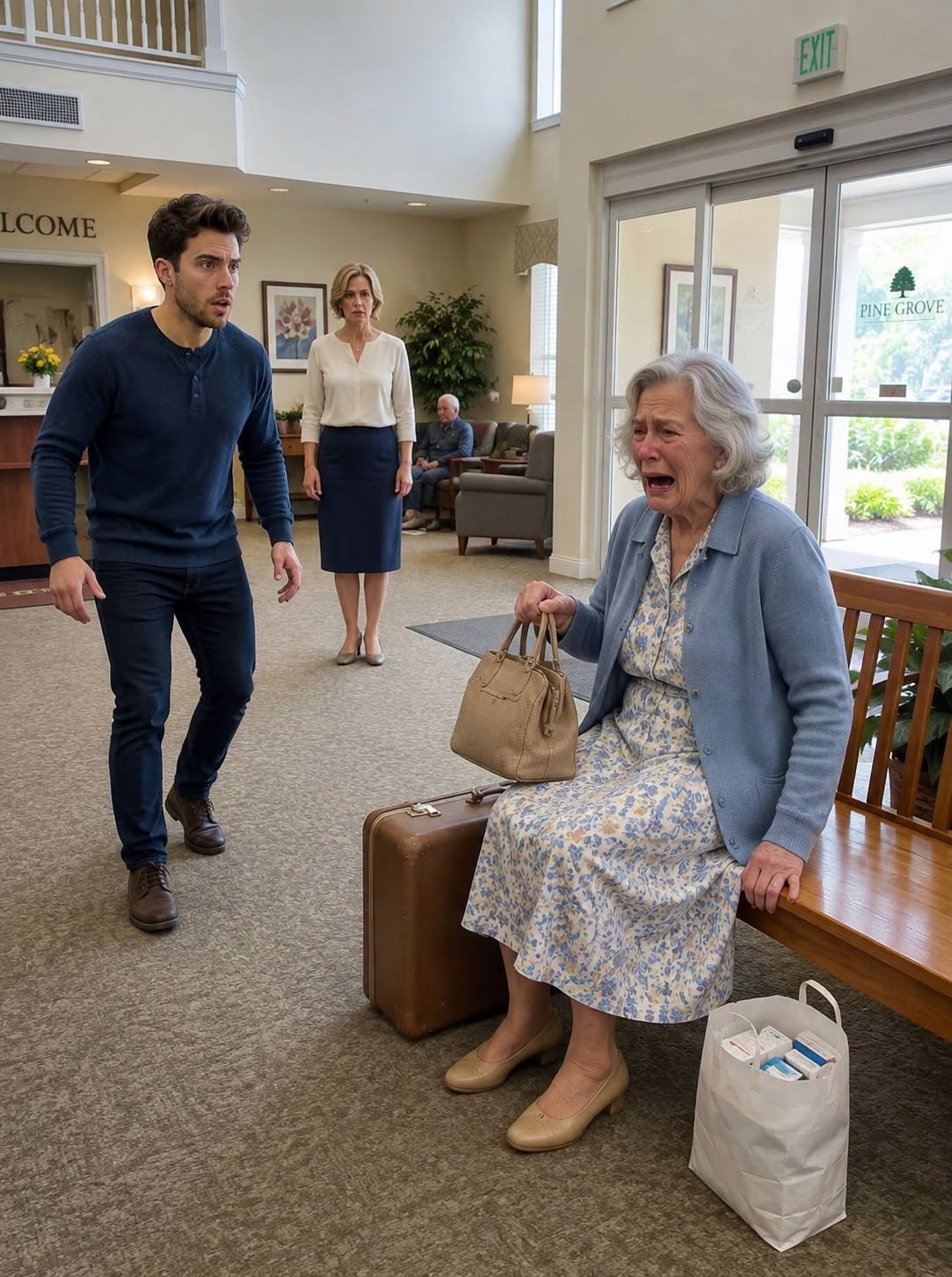
I thought about that first day.
The suitcase.
The grocery bag of medication.
Her coat buttoned to the throat.
How fragile she had looked beneath those fluorescent nursing-home lights.
I had believed I was rescuing her.
For months, that was the version I carried.
Until I finally understood.
Grandma Eleanor had never called me because she needed someone to save her.
She called because, before she dismantled the lie her family had built around her, she wanted one person beside her who still remembered who she really was.
And on the first warm afternoon of spring, beneath the tree my grandfather planted the day I came home, Grandma pressed the old house key into my palm, closed my fingers around it, and walked back inside without once looking over her shoulder.

