My parents told Grandma Eleanor they were taking her to lunch.
Three hours later, a nursing facility in Ohio called me.
“Is this Daniel Mercer?”
The woman on the phone had the careful voice people use when something has already gone wrong and they are trying not to make it worse.
“Yes.”
“My name is Patricia Sloan. I’m the admissions director at Willow Creek Senior Living. Your grandmother listed you as her emergency contact.”
I was standing barefoot in the kitchen of my Indianapolis apartment, one hand wrapped around a coffee cup gone lukewarm.
“What happened?”
A pause.
Then: “Her suitcase is still here in our lobby.”
I frowned.
“And?”
“The family members who brought her left before the admission paperwork was completed.”
For a moment, the refrigerator hummed louder than anything else in the room.
“What do you mean, they left?”
“They said they needed to retrieve documents from their car.” Patricia lowered her voice. “They never returned.”
My coffee cup touched the counter harder than I intended.
“Who brought her?”
Another pause.
“Your grandmother said it was her son and daughter-in-law.”
My parents.
I called Dad first.
Straight to voicemail.
Mom next.
Same.
I called again.
Again.
Nothing.
By the time I pulled onto I-70, my hands were locked around the steering wheel so tightly the bones in my knuckles had gone white.
It was 190 miles to Willow Creek.
I made it in less than three hours.
The facility sat behind a line of decorative pear trees near Dayton, all pale brick and cream-colored columns, with cheerful flower beds planted beneath windows that didn’t open more than six inches.
Inside, everything smelled of lemon cleaner, warm carpet, and overcooked vegetables.
Grandma Eleanor was sitting beside a single brown suitcase.
A grocery bag full of pill bottles rested between her sensible black shoes.
She was still wearing the navy wool coat she used for church even though the lobby was warm enough to make my forehead damp. Her silver hair was pinned neatly at the back of her head. Her handbag sat squarely on her knees.
She didn’t look frightened.
That scared me more.
Because Grandma Eleanor only became that still when she was furious.
I crouched in front of her.
“Grandma.”
She looked at me for several seconds.
Not through me.
At me.
As if she were checking whether I was really there.
Then she stood.
No hug.
No tears.
No explanation.
She picked up her handbag.
I took the suitcase.
We walked outside.
Halfway across the parking lot, I said, “I’m going to kill him.”
“Don’t be dramatic.”
Her voice was steady.
“He abandoned you.”
“I’m aware.”
“At a nursing home.”
“I noticed the sign.”
“Grandma—”
“Put the suitcase in the trunk, Daniel.”
I did.
She climbed into the passenger seat, pulled the seatbelt across her chest, and clicked it into place.
Then she looked straight ahead.
“Don’t call them.”
I stared at her.
“What?”
“Don’t call your parents.”
“I already did.”
“Then don’t call again.”
“Grandma, what the hell is going on?”
Her hands rested calmly on her handbag.
“I’ll tell you where to drive.”
I sat behind the wheel.
“Where?”
She looked at me.
“First, the county courthouse.”
That changed everything.
Twenty minutes later, rain began tapping against the windshield.
Grandma opened her purse.
She pulled out a folded bank statement and placed it on my thigh.
Three withdrawals had been circled in red ink.
$12,000.
$18,000.
$25,000.
All within six weeks.
I looked at the dates twice.
“Fifty-five thousand dollars?”
“Yes.”
“Where did it go?”
“That is a question your father has been avoiding.”
The words felt strange in my mouth.
“My father?”
“Your father has power of attorney.”
I turned toward her.
“Since when?”
“Since my hip surgery last winter.”
I remembered.
She’d fallen carrying groceries into her house. Dad had handled her insurance forms and hospital bills. Mom had stayed with her for a week after rehab.
“They told me I needed help,” Grandma said.
Her gaze stayed on the road.
“Robert said it would make things simpler. He could pay my utilities, deal with the insurance company, move money if there were emergencies.”
Robert.
She almost never called my father by his first name.
That told me how deep the wound went.
“So you signed?”
“I trusted my son.”
There was no anger in the sentence.
Only fatigue.
Which was worse.
“When did you find the withdrawals?”
“Yesterday morning. Paper statement came instead of electronic. Bank made some mistake.”
I swallowed.
“What did Dad say?”
“He said the money had been moved for my long-term care.”
I glanced toward the rearview mirror.
At the brown suitcase.
One coat.
One bag of pills.
One woman deposited in a lobby.
“He actually said that?”
“Yes.”
“What did Mom say?”
Grandma gave a small laugh with no humor in it.
“Your mother told me not to upset myself because confusion can make memory problems worse.”
I felt heat crawl up my neck.
“She said you were confused?”
“She’s been saying it for months.”
The rain thickened.
Grandma continued.
“Little things at first. She would move my glasses, then tell me I had forgotten where I put them. She’d change the time of an appointment and insist I wrote it down wrong. Once, she unplugged my freezer and told Robert I must have done it.”
I looked at her.
“Why didn’t you tell me?”
“You were working.”
“That’s not an answer.”
“No.”
She folded her hands together.
“It isn’t.”
Something in me cracked.
For the last eight months I had been doing exactly what families do when they want to believe everything is fine.
I accepted updates.
Dad said Grandma was “slowing down.”
Mom said she had “good days and bad days.”
Dad said she shouldn’t drive anymore.
Mom said she had started repeating herself.
I believed them.
Not completely.
But enough.
Enough to become useful to them.
I swallowed hard.
“Did they make you stop driving?”
“They took my keys.”
“Did you agree?”
“No.”
My hands tightened around the steering wheel again.
Grandma noticed.
“Daniel.”
“What?”
“Keep your eyes on the road.”
The command was so ordinary that I almost laughed.
Instead my eyes burned.
She reached into her coat.
This time she removed a yellowed envelope.
Across the front, in my grandfather’s handwriting, were two words.
HOUSE DEED.
Grandpa Frank had been dead nine years.
Seeing his blocky handwriting knocked the air out of me.
“I hid this yesterday,” Grandma said.
“Why?”
“I wanted to know if they’d go looking for it.”
A chill moved through me.
“Did they?”
“This morning your father went upstairs while your mother helped me put on my coat.”
“How do you know?”
“I put a thread across the top drawer.”
I turned slowly toward her.
Grandma lifted one eyebrow.
“I was married to a man who hid Christmas presents for forty-six years. I know how to set a trap.”
Despite everything, I barked out one shocked laugh.
Then her face hardened.
“Your father opened the drawer.”
The laugh died.
“They wanted the deed?”
“I think they wanted the house.”
The rain streaked the windows.
Grandma stared ahead.
“They didn’t leave me at Willow Creek because I needed care.”
Her voice dropped.
“They needed me somewhere nobody would believe me.”
The county courthouse closed in forty minutes.
We made it with eleven to spare.
Inside, fluorescent lights buzzed over pale tile floors.
Grandma moved slowly but refused my arm.
At the property records counter, a clerk named Melissa examined the deed.
She typed Grandma’s name.
Then stopped.
Her fingers hovered over the keyboard.
“Mrs. Mercer?”
“Yes?”
“Has anyone asked you to sign property documents recently?”
Grandma’s eyes shifted toward me.
“No.”
Melissa turned slightly toward her monitor.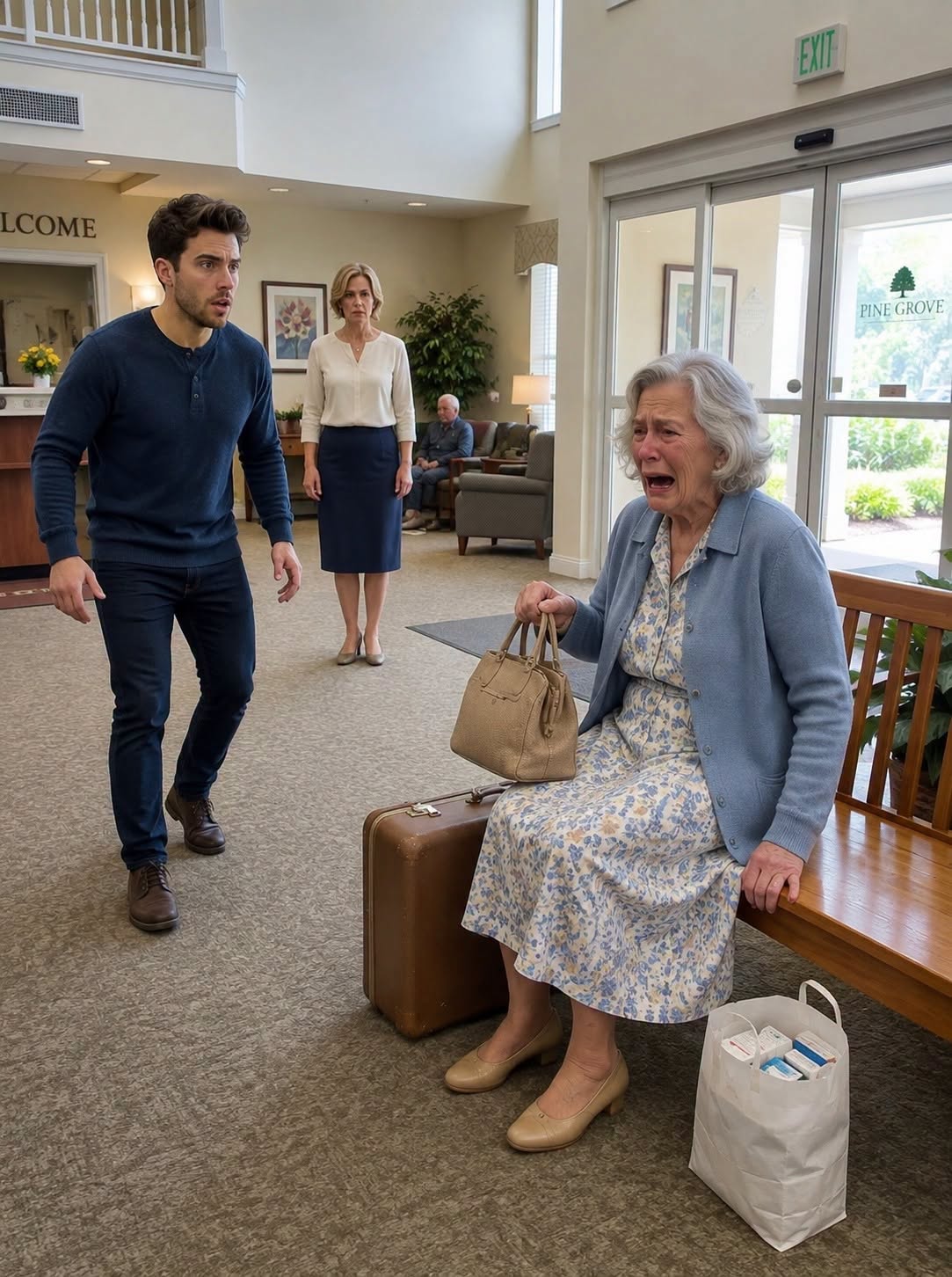
“Any refinancing paperwork?”
“No.”
“Home equity documents?”
“No.”
Grandma’s jaw tightened.
“My son brought papers to my house last week. He said they were insurance forms.”
Melissa became very quiet.
“What did you sign?”
“I didn’t.”
I looked at Grandma.
“You didn’t?”
“I told him I wanted my lawyer to review them.”
Melissa reached for the phone.
“What did you find?” I asked.
She didn’t answer immediately.
Then she looked at Grandma.
“There is a quitclaim deed pending recording.”
My skin went cold.
Grandma did not move.
Melissa continued carefully.
“It transfers ownership of your property to Robert Mercer and Janet Mercer.”
My parents.
I heard blood thudding in my ears.
Grandma whispered, “I never signed that.”
Melissa nodded.
“I’m going to get my supervisor.”
My phone rang.
Dad.
The name lit the screen.
ROBERT MERCER.
Grandma stared at it.
“Answer.”
“You said not to.”
“Now you may.”
I pressed speaker.
“Dad.”
His breath came fast.
“Where are you?”
“Why?”
“Where is your grandmother?”
I looked at Grandma.
She watched the phone as if it were an insect under glass.
“With me.”
“You had no right to remove her.”
I almost laughed.
“Remove her? You left her in a nursing-home lobby.”
“That’s not what happened.”
“Then tell me what happened.”
“She needs supervision, Daniel. She’s not well.”
Grandma’s face didn’t change.
Dad continued.
“She’s paranoid. She’s confused. She accuses us of stealing things.”
Grandma leaned toward the phone.
“Robert.”
Silence.
Then Dad’s voice softened instantly.
“Mom. Thank God. Listen, you’re upset.”
Grandma said nothing.
“Please come home. Janet and I can explain everything.”
“Explain the fifty-five thousand dollars?”
Another silence.
Dad breathed out.
“That money was transferred for your benefit.”
“To where?”
“A protected account.”
“Whose name?”
“Mom—”
“Whose name, Robert?”
He snapped.
“Why are you doing this?”
There it was.
Not fear.
Not shame.
Indignation.
As if she were embarrassing him.
Grandma closed her eyes.
When she opened them, something in her had changed.
“Because I spent fifty-eight years teaching you the difference between yours and mine.”
Dad began talking fast.
“Listen to me. Daniel doesn’t understand the situation. You told us yourself you didn’t want to become a burden.”
“I am not a burden.”
“I didn’t say—”
“You left me beside a suitcase.”
His breathing stopped.
Grandma continued.
“You took my car. You took my checks. You told my neighbors not to call me because I was resting. You told my grandson I was forgetting things.”
“Mom—”
“And now you tried to take my house.”
Dad’s voice hardened.
“You don’t need that house.”
There was the truth.
Small.
Ugly.
Casual.
“You’re eighty-two years old.”
Grandma’s mouth opened slightly.
I felt something inside me go dead.
Dad went on.
“The place is too much for you. Property taxes, maintenance, stairs. We were trying to protect the asset before medical expenses eat everything.”
Grandma asked one question.
“Protect it for whom?”
Dad didn’t answer.
He didn’t need to.
Melissa returned with her supervisor.
Grandma reached over.
She disconnected the call.
The bank stayed open late on Thursdays.
We arrived at 5:22.
By 6:10, we knew where the money had gone.
Not to long-term care.
Not to insurance.
Not to a protected account.
The withdrawals had been transferred into an LLC formed by my father four months earlier.
Mercer Residential Holdings.
“What is that?” Grandma asked.
The branch manager looked uncomfortable.
“According to public records, it appears to be a real-estate investment company.”
I knew.
Suddenly, I knew.
Dad had been talking about rental properties for years.
“Passive income,” he called it.
He watched videos about flipping houses.
He attended weekend seminars.
He complained that people who worked ordinary jobs were “trading time for money.”
Six months ago he told me he and Mom were finally buying a duplex.
I never asked where the down payment came from.
My stomach turned.
“Dad bought a rental property.”
Grandma looked at me.
“With my money?”
The bank manager said softly, “I can’t determine the purpose of the transfer.”
But we could.
Grandma stared at the statement for a long time.
Then she asked to revoke the power of attorney.
There were forms.
Phone calls.
An emergency fraud report.
Signatures.
By the time we walked into the parking lot, darkness had settled over Ohio.
I opened the passenger door.
“Indianapolis?”
Grandma shook her head.
“My house.”
I stared at her.
“Tonight?”
“Tonight.”
“Grandma, you’ve had enough.”
Her expression softened.
“That is precisely why we have to go now.”
Her house stood on a narrow street outside Springfield.
White siding.
Green shutters.
A porch Grandpa Frank built himself in 1987.
I had spent every Christmas there until college.
The porch light was on.
So were the upstairs lights.
Grandma saw them.
“So,” she said.
“What?”
“They’re still inside.”
My pulse jumped.
I parked across the street.
“Call the police.”
“Not yet.”
“Grandma.”
She touched my wrist.
“There is something you don’t know.”
The words stopped me.
She looked toward the house.
“Your grandfather knew Robert had problems with money.”
I frowned.
“What kind of problems?”
“Gambling, mostly. Sports. Cards. Online accounts later.”
My father?
I almost rejected it automatically.
Then memories rearranged themselves.
Dad disappearing during vacations.
Arguments behind closed doors.
Grandpa once refusing to lend him money.
Mom selling a bracelet and saying she wanted “something simpler.”
“Why didn’t anyone tell me?”
“Because families are very skilled at turning shame into secrecy.”
Grandma opened her purse.
She took out another envelope.
Not the deed.
This one was newer.
White.
Sealed.
My name was written across the front.
DANIEL.
“What is that?”
“A letter.”
“From who?”
“Your grandfather.”
I stared at her.
“He died nine years ago.”
“Yes.”
“Why would he write me a letter?”
“He didn’t write it nine years ago.”
Grandma’s eyes filled.
“He wrote it eighteen years ago.”
My chest tightened.
“What are you talking about?”
She held the envelope in both hands.
“Daniel, there’s a reason you were always listed as my emergency contact.”
A coldness deeper than fear moved through me.
“Grandma.”
She looked straight at me.
“Robert is your father on your birth certificate.”
The street seemed to go silent.
“But he is not your biological father.”
I didn’t breathe.
Grandma’s voice trembled for the first time all day.
“Your mother was nineteen when you were born. She and Robert had separated for almost a year. There was another man.”
I shook my head.
“No.”
“His name was Samuel Reed.”
The name meant nothing.
And somehow that made it worse.
“Robert chose to raise you,” she continued. “Your grandfather respected him for that. Whatever Robert became later, Frank never forgot that choice.”
I stared through the windshield.
The porch light blurred.
“Why tell me now?”
Grandma began crying silently.
Not hard.
Just two tears sliding down the same composed face that had survived the nursing-home lobby without one.
“Because your father found the letter last week.”
I turned.
“What?”
“He was looking for the deed.”
She placed the envelope in my hand.
“He found this instead.”
My mouth went dry.
“And?”
“He told me if you ever learned the truth, you would leave him too.”
The word too landed strangely.
“Who left him?”
Grandma looked toward the house.
“Your mother.”
I went still.
“What?”
“She filed for divorce three weeks ago.”
Everything shifted.
The unanswered calls.
The money.
The house.
The nursing facility.
Mom had been part of it.
Hadn’t she?
Grandma shook her head before I could ask.
“Your mother did not leave me there.”
I stared at her.
“She was in the car.”
“No.”
“You told the facility—”
“I told them my son and daughter-in-law brought me.”
“Yes.”
“I did not tell them Janet left.”
My heart began pounding.
Grandma looked toward the upstairs window.
“Your father told your mother he was taking me to lunch alone.”
I could barely hear myself.
“Then who was with him?”
The front door opened.
A woman stepped onto the porch.
Not my mother.
A stranger.
Mid-forties.
Blonde.
Wearing Mom’s camel-colored winter coat.
She carried a cardboard box.
Dad appeared behind her.
Grandma whispered:
“That is Linda Carver.”
“Who is Linda?”
“The real-estate agent who helped your father buy the duplex.”
A terrible understanding began assembling itself.
Grandma continued.
“And, according to your mother, the woman he has been sleeping with for almost a year.”
Dad saw my car.
Stopped.
Linda followed his gaze.
For three seconds, nobody moved.
Then Dad ran toward us.
I stepped out before he reached the curb.
“Daniel.”
“Stay there.”
“This isn’t what you think.”
I laughed once.
The sound frightened even me.
“What exactly do I think?”
He stopped in the road.
Grandma got out slowly.
Dad’s face collapsed when he saw her.
“Mom, please.”
She closed the car door.
“You forged my signature.”
He flinched.
“I was going to fix it.”
“You stole my money.”
“I borrowed it.”
“You abandoned me.”
His eyes reddened.
“I panicked.”
“No.”
Grandma shook her head.
“You planned.”
He looked suddenly old.
Older than she did.
“Janet left me. The duplex is underwater. Linda’s investor pulled out. I had debts.”
“So you sold your mother?”
“I did not sell you!”
“You packed my pills.”
The street went silent.
Dad began to cry.
“I didn’t know what else to do.”
Grandma stepped closer.
“You could have told the truth.”
“I knew what you’d say.”
“Yes.”
Her voice was soft now.
“I would have said no.”
He looked at me.
And then his eyes dropped to the white envelope in my hand.
His entire face changed.
“Mom.”
Grandma didn’t answer.
“You promised.”
“No,” she said. “I promised Frank that I would tell Daniel when the truth became necessary.”
Dad looked at me.
“Danny.”
I hated how small I felt hearing the childhood name.
“What’s in the letter?”
He swallowed.
“Nothing that matters.”
I looked at Grandma.
Then I opened it.
The paper inside was yellowed at the folds.
Grandpa’s handwriting shook slightly.
Daniel,
If Eleanor ever gives you this, it means our family has reached a place I prayed it never would.
Robert chose to be your father.
That choice was real.
Never let blood convince you that love was false.
But never let love convince you that betrayal must be forgiven.
There was more.
I stopped.
One paragraph had been underlined.
When you were born, I created a trust in your name. Robert knows about it. It contains the controlling interest in the Mercer family property portfolio. He has no legal claim to those assets. Neither does your mother. They belong to you after Eleanor’s death, unless Eleanor chooses to activate the trust early.
I looked up.
Grandma was watching me.
Dad whispered, “Mom, don’t.”
And suddenly I understood the courthouse.
The bank.
The house.
The entire day.
Grandma had not been improvising.
She had been following steps.
“Grandma?”
She nodded.
“I activated it this morning.”
Dad staggered backward as if someone had struck him.
“What?”
“The duplex your father purchased with my money,” Grandma said, “was bought through a company that pledged one of Frank’s old rental properties as collateral.”
I looked at Dad.
He couldn’t meet my eyes.
Grandma continued.
“He thought I didn’t understand the documents.”
Her voice became sharp.
“I understood every page.”
Dad whispered, “You’ll ruin me.”
Grandma’s face broke then.
Not with anger.
With grief.
Pure, maternal grief.
The kind that survives even when the child no longer deserves protection.
“Oh, Robert.”
She stepped into the street.
“You ruined yourself.”
He covered his face.
Linda had vanished back inside.
Somewhere down the block, a dog barked.
I stood there holding my dead grandfather’s letter.
A trust worth more money than I could understand.
A father who wasn’t my biological father.
A grandmother who had been treated like luggage.
And the strangest thing was that none of the money mattered.
Not then.
I looked at Dad and remembered him teaching me to ride a bicycle.
Running behind me.
One hand on the seat.
Then letting go.
I remembered him sitting beside my hospital bed when I had pneumonia at eleven.
Sleeping upright in a plastic chair.
I remembered college move-in day when he carried my mini-fridge up four flights because the elevator was broken.
Those things were true.
So was this.
That was the cruelty.
A person could love you and still become someone you needed protection from.
Dad lowered his hands.
“Daniel.”
I waited.
He looked terrified.
“Are you going to take everything?”
My throat tightened.
There it was.
Not: Do you still consider me your father?
Not: Can you forgive me?
Not even: Is Mom okay?
Just—
The money.
I folded Grandpa’s letter.
“No.”
Dad’s shoulders dropped in relief.
Then I said:
“Grandma is.”
He stared at me.
I turned to her.
“You’re coming back to Indianapolis with me.”
Grandma shook her head.
“No.”
“What?”
She looked at her house.
The porch.
The green shutters.
The maple tree Grandpa planted the year I was born.
“I spent fifty-two years in this house,” she said. “I buried a husband from this house. I raised a son in this house. I have outlived cancer, two broken hips, and your grandfather’s attempt to install his own dishwasher.”
A faint smile touched her mouth.
“He flooded the kitchen.”
I laughed through tears.
Grandma looked at me.
“I am not leaving because someone tried to make me feel old.”
Dad began crying again.
She did not look at him.
That was his punishment.
Not jail.
Not money.
Not even losing the house he had tried to steal.
It was becoming irrelevant to the woman whose love he had mistaken for weakness.
The police came thirty minutes later.
So did my mother.
She pulled up in a dented blue sedan I didn’t recognize, stepped out, saw Grandma on the porch, and crumpled.
“Eleanor.”
Grandma opened her arms.
Mom crossed the yard like a child.
She buried her face against Grandma’s shoulder.
“I’m sorry.”
Grandma held her.
“I know.”
“I should’ve told Daniel.”
“Yes.”
“I should’ve stopped Robert sooner.”
“Yes.”
“I was ashamed.”
Grandma stroked her hair.
“I know that too.”
Dad watched from the back of the police cruiser.
For one second, Mom looked toward him.
Their eyes met.
Thirty years of marriage passed silently between them.
Then she turned away.
Three months later, the criminal case was still moving through the courts.
Dad took a plea deal.
Restitution.
Probation.
No prison.
Grandma asked the prosecutor not to seek incarceration.
I argued with her about that.
She let me finish.
Then she said, “Justice and revenge are neighbors, Daniel. I prefer not to confuse their houses.”
She recovered most of the money.
The forged deed disappeared from the property record.
Mom rented a small apartment fifteen minutes away.
They began having coffee every Sunday.
As for me, I drove to Ohio twice a month.
Sometimes Grandma and I talked about the trust.
Usually we didn’t.
One afternoon in May, I found her standing in the backyard beneath the maple tree.
She had one hand resting against its trunk.
“Grandpa planted this for me, didn’t he?” I asked.
She smiled.
“The morning after you came home from the hospital.”
I stood beside her.
“Did he know I wasn’t Robert’s?”
“Yes.”
“And he didn’t care?”
Grandma looked offended.
“Your grandfather cared very much.”
She touched the bark.
“He cared that you were ours.”
My eyes burned.
I looked toward the house.
“Do you regret not telling me sooner?”
She considered this.
“No.”
Then, after a moment:
“But I regret teaching your father that forgiveness meant consequences would never come.”
The wind moved through the leaves.
Green light flickered across her face.
I thought about that first day.
The suitcase.
The grocery bag of medication.
Her coat buttoned to the throat.
How fragile she had looked beneath those fluorescent nursing-home lights.
I had believed I was rescuing her.
For months, that was the version I carried.
Until I finally understood.
Grandma Eleanor had never called me because she needed someone to save her.
She called because, before she dismantled the lie her family had built around her, she wanted one person beside her who still remembered who she really was.
And on the first warm afternoon of spring, beneath the tree my grandfather planted the day I came home, Grandma pressed the old house key into my palm, closed my fingers around it, and walked back inside without once looking over her shoulder.

