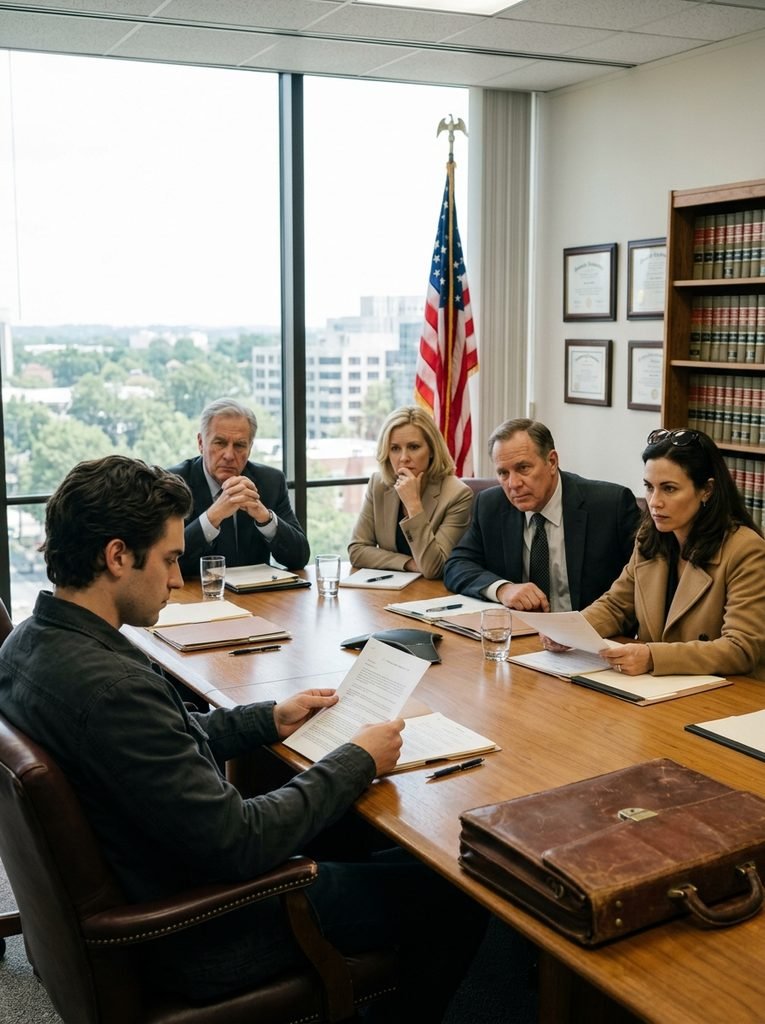
“What’s going on here?” I asked, my voice even but sharp enough to make her husband flinch a little.
Clare came out the front door, arms crossed, wearing that smug smile I’d seen too many times.
“We’re moving in,” she said simply, like it was the most obvious thing in the world. “The house is mine now, Oliver. Might as well make it feel like home.”
“I see that,” I said, glancing at the table being carried inside. “Guess mom and dad’s stuff didn’t even make it past the first month.”
Claire’s face didn’t change.
“We’re donating what we don’t want. It’s for the best, a fresh start.”
I don’t know why, but that line, “What we don’t want,” hit me harder than anything else she’d said.
These weren’t just objects.
They were pieces of my childhood.
The couch I’d fallen asleep on during family movie nights. The bookshelf Dad had built by hand in the garage.
They were just clearing it all out like it was trash.
“Did you at least ask mom and dad?” I asked, my voice quieter now.
Claire tilted her head.
“Asked them what? The will gave me the house and everything in it. They knew what they were doing. Honestly, Oliver, you’re taking this way too personally. This is just logistics.”
Logistics.
That was the moment something inside me snapped, though not in the way I expected.
I didn’t yell, didn’t curse, didn’t make a scene.
I just stood there watching as strangers carried out pieces of my family history, and I felt something cold settle into place.
“Fine,” I said.
“Finally. Do what you want. It’s your house now, right? But don’t call me when the bills keep coming. I’m done.”
I turned to leave, but before I reached my car, Clare called after me.
“Oh, by the way, Dad mentioned you still have the keys to the lake cabin. He said to bring them by this week. We’re taking over maintenance on that, too.”
I froze.
The cabin wasn’t even part of the will.
It was in a trust that Dad and I had both been managing.
My name was still on every document, every account tied to it.
“The cabin isn’t yours,” I said, turning back slowly.
“Not yet,” she replied almost casually, “but dad’s going to sign it over. He said, ‘There’s no point in you keeping control when you’re acting like this.’”
And there it was.
The betrayal clear as day.
They weren’t just content to cut me out of the house.
They were going for everything.
Every shared asset, every connection I had to the family’s history.
They wanted me erased completely, rewritten as the bitter son who chose to walk away.
I didn’t respond.
I just got in my car and drove off, hands gripping the steering wheel so hard my knuckles went white.
I drove aimlessly for almost an hour past neighborhoods I didn’t recognize until I finally pulled into an empty parking lot and just sat there.
That night, mom called.
I let it go to voicemail, but I listened to it later.
Her voice was calm, measured, almost rehearsed.
“Oliver, we’ve been talking, and we think it’s best if Clare takes over managing the cabin, too. This fighting isn’t good for anyone. And honestly, we think some distance might help you figure out what’s really important. Please bring the keys by before the end of the week.”
What’s really important?
The phrase made my stomach turn.
They’d made their choice, and now they were trying to make it sound like it was for my own good.
The next morning, I drove out to the cabin.
It was early, mist still hanging over the lake, and the air was so still, it almost felt wrong to breathe too loudly.
I sat on the porch steps for a long time, thinking about all the summers we’d spent here, fishing with dad, campfires with cousins, even the time Clare broke her arm falling off the dock.
And everyone made me feel guilty for not watching her more carefully.
I unlocked the door and stepped inside.
Everything smelled the same, with smoke, lake water, dust.
I walked through each room slowly, almost like I was saying goodbye.
And then I sat at the kitchen table and took out my phone.
I had the power to transfer control of the trust funds with a few taps, to put every asset under CLA’s name right there and then.
Instead, I did something else.
I changed the access codes, locked everything down tighter than it had ever been.
And then I drove back to my apartment, parked my car, and waited.
It didn’t take long.
By that evening, Clare was calling again, her voice sharp now, all pretense of civility gone.
“You changed the codes. The bank said, ‘You locked the trust.’ What is wrong with you? Do you have any idea how difficult you’re making this for everyone?”
“For everyone or just for you?” I asked, my voice steady.
She hesitated, then said, “Mom and dad aren’t going to put up with this. You’re just digging yourself deeper.”
“Good,” I said. “Let them try.”
I hung up before she could respond.
My phone lit up again a few seconds later, then again.
And again.
I turned it off completely and sat back on my couch staring at the ceiling.
For the first time since the wool reading, I didn’t feel powerless.
I didn’t feel like the overlooked son or the family scapegoat.
I felt something else entirely, something dangerous.
And I had a feeling things were about to get a lot worse before they got better.
The calls didn’t stop.
They came morning, noon, and night.
First from Clare, then from mom, then from numbers I didn’t recognize, but could guess were aunts, uncles, maybe even dad borrowing a co-orker’s phone when I stopped answering his.
At first, I left the phone on silent, let the missed call stack up.
But by the third day, the constant buzzing was getting to me.
I shut the phone off completely and tossed it in a drawer.
That night, I sat in my apartment staring at the dark.
The city outside my window kept humming along.
Cars passing, muffled voices from the street.
But inside, it was quiet.
Too quiet.
I couldn’t shake the image of the house, the moving truck, the table being carried through the door like I’d never existed.
The thought that my family, my own blood, had decided I was disposable nod at me until I felt hollow.
It didn’t help that the rest of my life started fraying at the edges, too.
I was late to work twice that week because I couldn’t sleep, tossing and turning until sunrise.
My manager pulled me aside on Friday and asked if I was okay, and I lied and said I was just tired.
Even my friends noticed something was off.
When I skipped game night for the third week in a row, my best friend texted, “Hey man, we miss you. You good?”
I typed out three different replies before deleting them all and leaving him on Reed.
How do you explain to someone that your entire family decided you were worth zero?
And somehow that hurts worse than if they’d left you a single insulting dollar.
By the end of the month, the silence wasn’t peaceful anymore.
It was heavy.
The kind of heavy that pressed down on you when you were alone too long.
I tried to distract myself, threw myself into work, into cleaning, into anything that might make me feel like I was in control again.
It didn’t really work.
Then came the letter, a real paper letter sent to my apartment.
The envelope had my parents’ return address written in my mom’s neat handwriting.
Inside was a single page typed:
“Over, we’ve been patient. Your behavior is hurting this family. The cabin is no longer yours to control. We are in the process of transferring ownership to Clare legally with or without your cooperation. You need to stop being difficult and think about the bigger picture. We hope you’ll come to your senses and make this right before things get worse. Mom and dad.”
I read it three times, my hands shaking by the third pass.
It wasn’t even the words themselves.
It was the tone.
Cold, business-like, like I was some employee refusing to hand over company property.
No acknowledgement of how I might be feeling.
No attempt at understanding, just a warning.
I put the letter on the counter and sat there staring at it for what felt like an hour.
That was my breaking point.
Not anger, not even sadness, just this deep, hollow ache that I couldn’t shake.
My own parents had written me out of their lives so cleanly.
It was like I’d never been there.
That weekend, I drove out to the cabin again.
Not because I had a plan, but because I didn’t know where else to go.
It was drizzling, the kind of thin, cold rain that soaked through your clothes before you realized it.
The cabin was silent, exactly as I’d left it, but stepping inside felt different this time, heavier.
I made a fire in the old stone fireplace, sat on the floor with my back against the couch, and just listened to the rain on the roof.
For a long time, I didn’t move.
I thought about every fight, every family dinner where I was told to just let it go for the sake of peace.
I thought about how many times I’d covered for Clare’s mess ups growing up.
The time she crashed dad’s car and blamed me.
The time she maxed out mom’s credit card and somehow I got lectured about being more responsible with money.
Somewhere between midnight and sunrise, something shifted.
The ache was still there, but under it there was this flicker of something else.
Resolve.
If they wanted to cut me out, fine.
But I wasn’t going to just sit quietly and let them take everything without a fight.
Over the next week, I started putting things in motion quietly, carefully.
I contacted the bank and set up notifications for every attempt to access the trust, every attempted withdrawal.
I met with a lawyer, a quiet, sharp man who listened more than he spoke.
And when I was done explaining everything, he nodded and said, “You have options.”
Those three words were enough to make me feel like I could breathe again.
Back at work, I kept my head down, but people could tell something was changing.
I wasn’t smiling much, but I wasn’t dragging myself through the day anymore either.
At night, I stayed up late researching property law, trust management, tax implications.
It wasn’t revenge yet.
Not exactly, but it was the first step toward reclaiming some control.
Then one evening, while I was kneede in paperwork at my kitchen table, my phone buzzed with a notification I hadn’t been expecting.
An alert from the bank.
Someone had tried to authorize a transfer from one of the frozen accounts.
I checked the details.
It was Clare.
She tried to move money for another renovation expense, probably thinking I’d cave by now.
Instead of getting angry, I smiled.
For the first time in weeks, a real smile.
Because now I had proof, documented, timestamped proof that she was trying to access funds she had no right to touch.
I shut my laptop and sat back staring at the ceiling.
It wasn’t over, not even close.
But for the first time since the wool reading, I felt something that almost felt like hope.
Whatever they thought was going to happen next, they were about to find out just how wrong they were.
And I was going to make sure of it carefully, patiently, and in a way they’d never see coming.
The shift didn’t happen overnight, but it was real.
I could feel it in the way I carried myself, in the way I started looking people in the eye again.
Something about sitting across from that lawyer had woken me up.
For the first time since the will reading, I wasn’t reacting, I was acting.
I scheduled another meeting with the lawyer a week later.
This time with a list of specific questions.
He walked me through every option available to me, patiently explaining the steps I could take to reinforce my position as co-rustee of the cabin property and how to formally document my refusal to authorize any transfer.